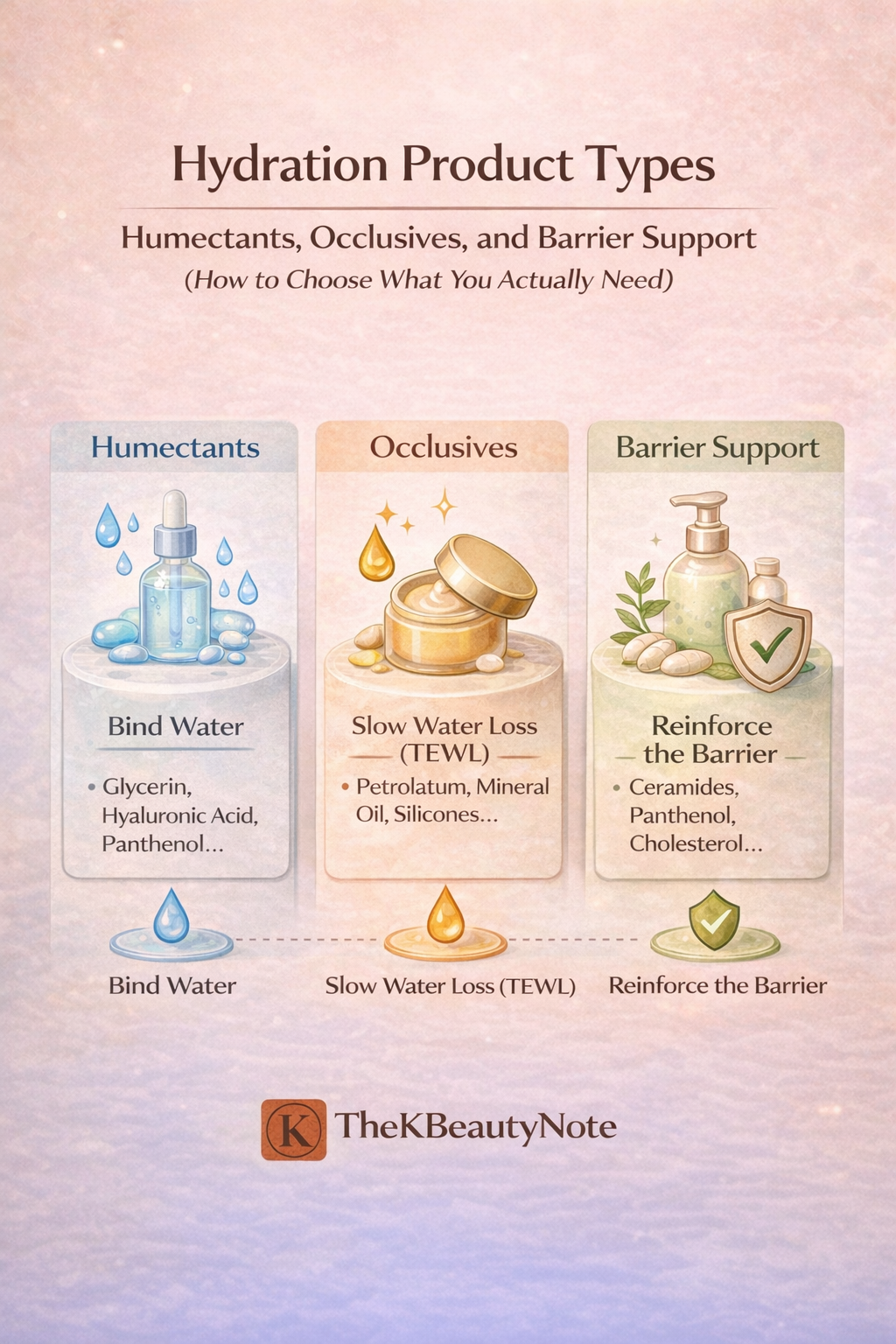
Hydration Product Types: Humectants, Occlusives, and Barrier Support
Hydration isn’t one ingredient or one product. It’s a system.
In the previous post, we explained hydration as three connected jobs:
- Water binding (bringing and holding water in the upper layers)
- Water loss reduction (slowing TEWL, or transepidermal water loss)
- Barrier support (strengthening the structure that helps skin keep water and resist irritation)
This post turns that system into something practical: the three main product types you’ll see in skincare, what they actually do, and how to combine them without overcomplicating your routine.
The 3 product types that make up most “hydrating routines”
Almost every moisturizing routine is a combination of these categories:
- Humectants → bind water
- Occlusives → slow water loss (TEWL)
- Barrier-support products → reinforce the barrier over time
You don’t need all three in every routine. You need the right mix for your current skin “mode.”
1) Humectants: water binders
Humectants attract and hold water in the stratum corneum (the top layer of skin). They can make skin feel smoother and more “plump” quickly.
Common humectants
- Glycerin
- Hyaluronic acid
- Panthenol
- Beta-glucan
- Amino acids
- Urea (lower levels hydrate; higher levels can exfoliate).
- Polyglutamic acid (in some formulas)
When humectants help the most
Humectants are especially useful when your skin feels:
- Tight but not necessarily flaky
- “Oily but tight” (dehydrated-oily)
- Dull, rough, or makeup cracks easily
- Extra dry indoors (heating/AC)
Best application tip: Apply humectants when skin is slightly damp (after cleansing or misting), then follow with a moisturizer.
Common mistake: humectants-only routines
If TEWL is high (dry air, barrier stress), humectants can feel like they “disappear.” That usually means you need:
- better water loss reduction (occlusive), or
- more barrier support,
not more layers of the same hydrating serum.
2) Occlusives: water loss reducers
Occlusives form a thin film on the surface of skin that slows evaporation. This is one of the most direct, practical ways to reduce TEWL.
Common occlusives / film formers
- Petrolatum
- Mineral oil
- Dimethicone and other silicones
- Waxes
- Some richer butters (formula-dependent)
- Some oils (depending on the formula and skin type)
When occlusives help the most
Occlusives are especially helpful when:
- Humidity is low (winter, wind, indoor heating)
- Skin feels tight again shortly after moisturizing
- You wake up with tightness
- Your barrier is stressed (over-exfoliation, retinoid adjustment, travel)
Acne-prone tip: you don’t have to avoid occlusives
If you’re acne-prone, occlusives can feel heavy when applied too broadly. Usually the fix is amount and placement, not total avoidance.
Try:
- A tiny amount only on the driest zones (cheeks, around the mouth)
- Lighter textures with silicones (gel-cream film formers)
3) Barrier-support products: structure + calm
Barrier support isn’t just “adding moisture.” It’s about improving the skin’s ability to hold water and resist irritation consistently over time.
This category often includes:
- Barrier lipids: ceramides, cholesterol, fatty acids (often most effective as a mix)
- Soothing support: panthenol, allantoin, madecassoside, colloidal oatmeal
- Tolerance-friendly helpers: niacinamide (when well tolerated, at suitable levels)
Signs you benefit from barrier support
- Products sting easily
- Redness shows up randomly
- Dry patches keep returning
- Skin feels reactive and unpredictable
What progress looks like: fewer flare-ups, less stinging, and more stable texture day to day.
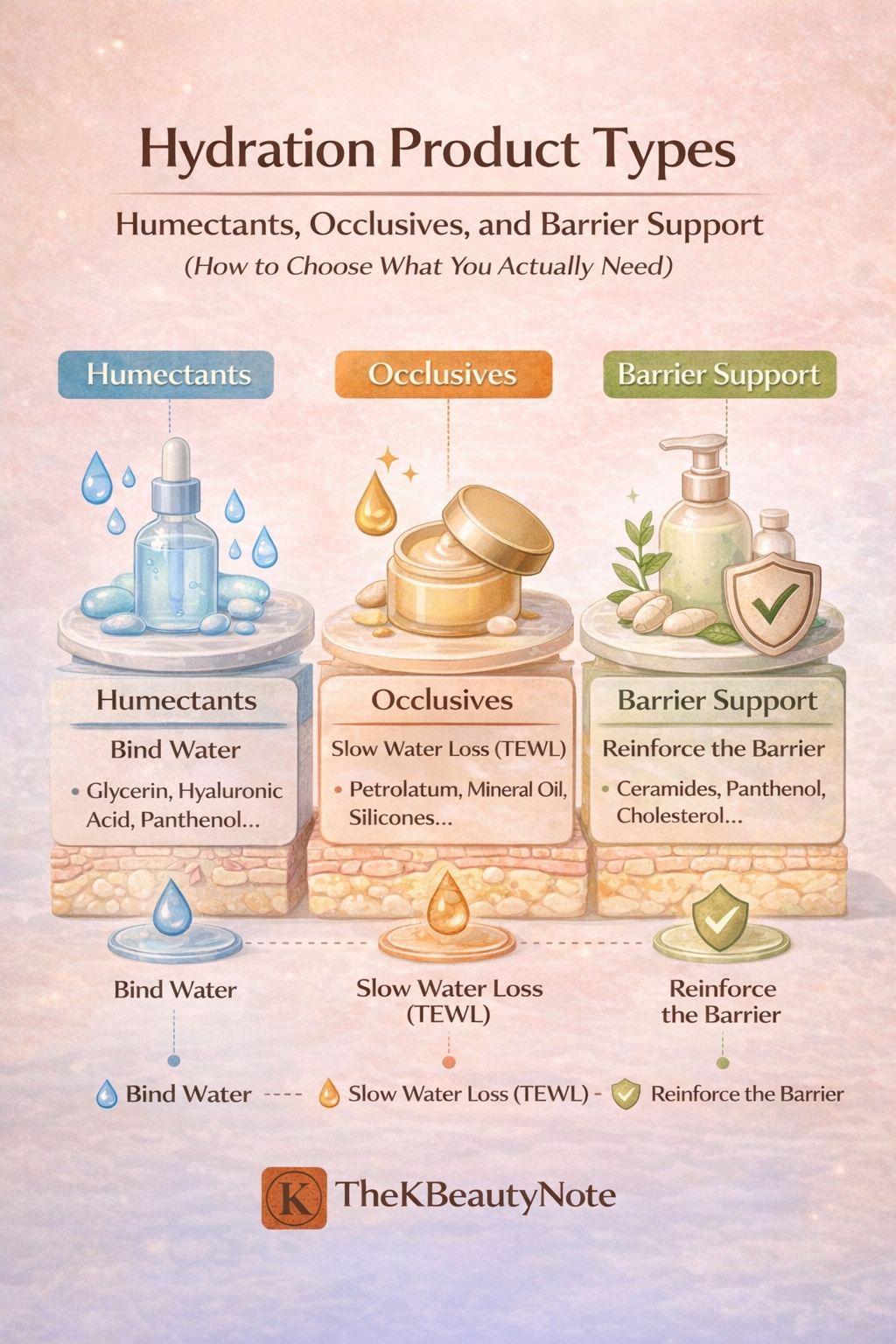
How to combine the three types (simple layering)
A reliable structure is:
Humectant → Barrier-support moisturizer → Occlusive (only if needed)
The “two-step” routine most people can use
If your moisturizer already contains barrier lipids and some film-formers, you may only need:
- Humectant (optional, lightweight)
- Moisturizer
The “night seal” routine for dry seasons
When weather is cold or humidity is low:
- Use your normal layers
- Add a thin occlusive layer at night (or only on dry zones)
This is one of the fastest ways to reduce morning tightness.
Choose by skin “mode” (quick guide)
Mode A: Dehydrated (tight, not necessarily flaky)
- Start with a light humectant
- Follow with a balanced moisturizer
- Add occlusive only if tightness returns quickly
Mode B: Barrier-stressed (stinging, redness, frequent flare-ups)
- Prioritize barrier-support moisturizer
- Keep steps minimal
- Add humectants only if well tolerated
- Consider a small occlusive seal at night if needed
Mode C: Stable (normal days)
- Light humectant (optional) + moisturizer is usually enough
- Save heavier sealing for climate shifts or irritation phases
FAQ
Do I need hyaluronic acid to hydrate?
Not necessarily. Glycerin and panthenol hydrate extremely well. Consistency and tolerance matter more than one trendy ingredient.
Why do “hydrating” products feel tight in winter?
Because TEWL increases in low humidity. Add a better seal (occlusive) or use a richer moisturizer at night.
Are occlusives always pore-clogging?
Not always. Many people do fine with silicones or small amounts of petrolatum on dry zones. Skin type and the formula matter.
Do I need all three types every day?
No. Think of them as tools. Use more sealing and barrier support when stressed, less when stable.
Quick takeaways
- Humectants bind water, but don’t always prevent water loss
- Occlusives slow TEWL and improve comfort in dry conditions
- Barrier support improves long-term stability and reduces reactivity
- The goal is the right mix, not more steps
Next in Skin Functions
In the next post, we’ll cover how to adjust your hydration routine by season and humidity, and when simplifying your routine is the smartest move.